
Creatine: A Foundational Nutrient for Energy, Brain, and Body
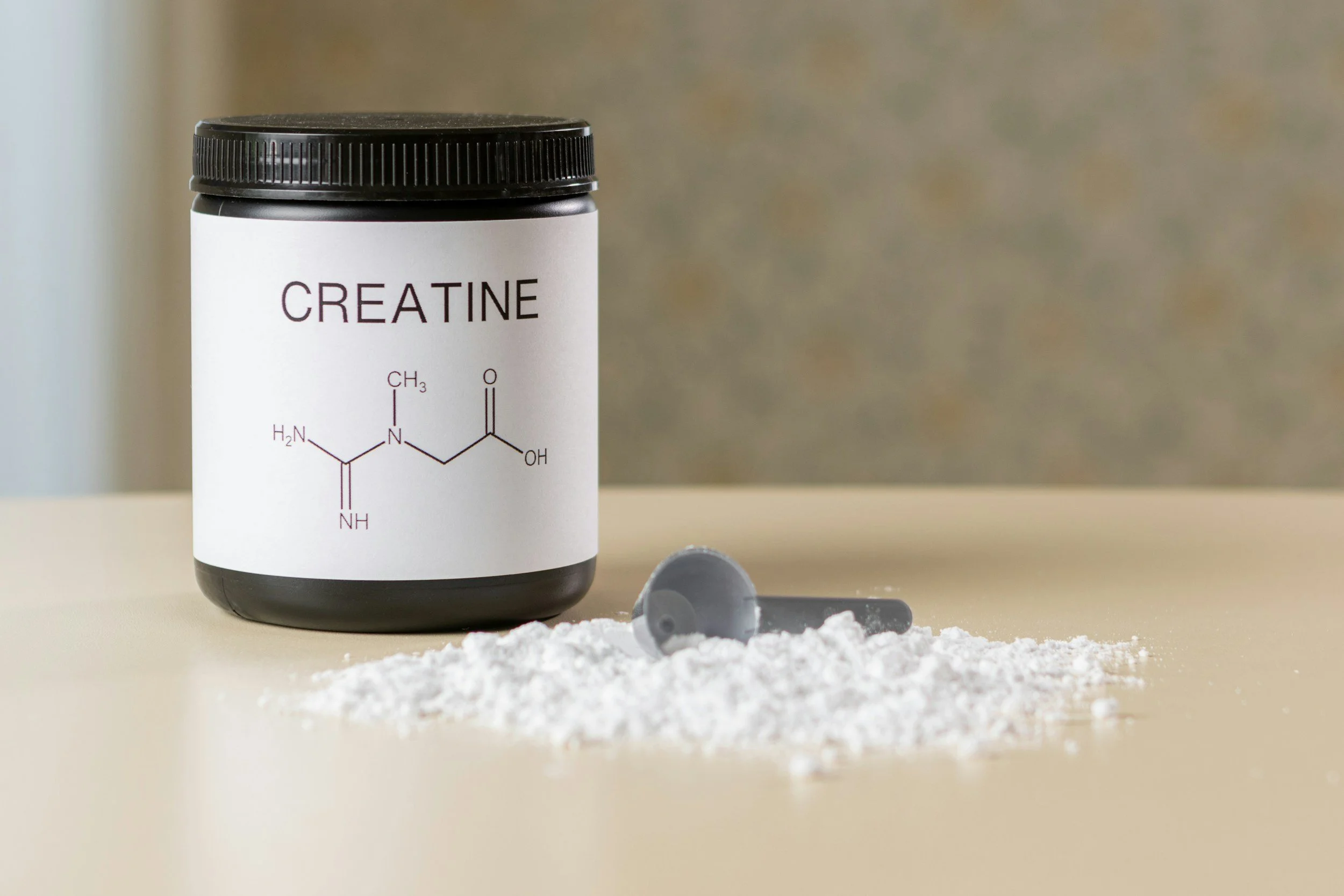
Creatine
Creatine is one of the most extensively researched nutritional compounds, yet it is still commonly misunderstood.
While often associated with muscle growth and athletic performance, creatine plays a far more fundamental role in human physiology — one that is highly relevant in everyday clinical practice.
What is Creatine?
Creatine is a naturally occurring compound made in the liver, kidneys, and pancreas from amino acids (arginine, glycine, and methionine). It is also obtained in small amounts through food, primarily from red meat and fish.
Approximately 95% of creatine is stored in skeletal muscle, with the remaining amount found in the brain and other tissues.
Its primary role is to support the production and recycling of cellular energy.
Creatine and Cellular Energy
At the core of creatine’s function is its relationship with ATP (adenosine triphosphate), the body’s main energy molecule.
Creatine helps regenerate ATP through the phosphocreatine system, particularly during periods of high energy demand.
In simple terms, this means:
Faster energy availability for muscles
Sustained energy for brain function
Improved resilience under physical and mental stress
Tissues that require large amounts of energy — such as muscle, brain, and the nervous system — are the most responsive to creatine support.
Beyond Performance: Clinical Applications
The research around creatine has expanded significantly, showing benefits across multiple systems:
1. Cognitive Function and Brain Health
Creatine supports brain energy metabolism and may assist with:
Mental clarity and focus
Memory and cognitive processing
Reduced mental fatigue
This becomes particularly relevant in periods of stress, sleep deprivation, or high cognitive demand.
2. Women’s Health and Hormonal Transitions
Creatine is increasingly recognised as supportive during:
Perimenopause and menopause
Hormonal fluctuations
Fatigue and reduced muscle mass
It may help maintain lean muscle tissue, energy levels, and cognitive function during these transitions.
3. Muscle Health and Healthy Ageing
With ageing, there is a natural decline in muscle mass and strength (sarcopenia).
Creatine has been shown to:
Support muscle preservation
Improve strength and functional capacity
Enhance recovery
This makes it highly relevant not just for athletes, but for long-term mobility and independence.
4. Nervous System and Mood Regulation
Emerging research suggests creatine may play a role in:
Supporting nervous system resilience
Reducing fatigue associated with stress
Assisting mood regulation
This aligns with its role in stabilising cellular energy within the brain.
Why It Matters in Clinical Practice
Many clients present with signs of low energy capacity, rather than simply low energy.
This may appear as:
Ongoing fatigue
Brain fog
Reduced resilience to stress
Poor recovery
From a physiological perspective, this often reflects reduced efficiency in cellular energy systems.
From a Chinese medicine perspective, it mirrors patterns of:
Qi deficiency
Spleen and Kidney depletion
Creatine offers a simple, well-researched way to support this foundational layer.
Integration into Treatment
In practice, creatine is not used as a stand-alone solution.
It is integrated alongside:
Acupuncture to regulate Qi and Blood
Breathwork to support nervous system coherence
Nutritional and lifestyle support
Within this framework, creatine helps the body:
Sustain energy
Adapt more effectively
Hold therapeutic change
A Final Perspective
Creatine is often overlooked because of its simplicity.
Yet it directly supports one of the most essential processes in the body — the ability to create and sustain energy at a cellular level.
When this system is supported, many other functions begin to improve naturally.
And in clinical work, this is often where meaningful, lasting change begins.
