Stretching, Yet Still Tight? What Your Body Is Really Asking For
Sports massage athlete recovery
Understanding stretching, movement, and why your body may not be responding
With Johanna Keyes - Massage Therapist
You stretch, but the tightness returns. You move, but something still feels restricted.
Or your body feels uneven, one side working harder than the other.
This is common and often, it’s not about doing more stretching.
It’s about understanding what your body is actually asking for.
There are three main ways we work with muscle and movement:
1. Flexibility (stretch and hold)
This helps lengthen the muscle and reduce general tightness. It’s useful if you feel stiff, especially in the morning or after resting.
2. Mobility (movement through range)
This builds strength and control as you move in and out of your range. It supports how your body functions in walking, training, and daily movement.
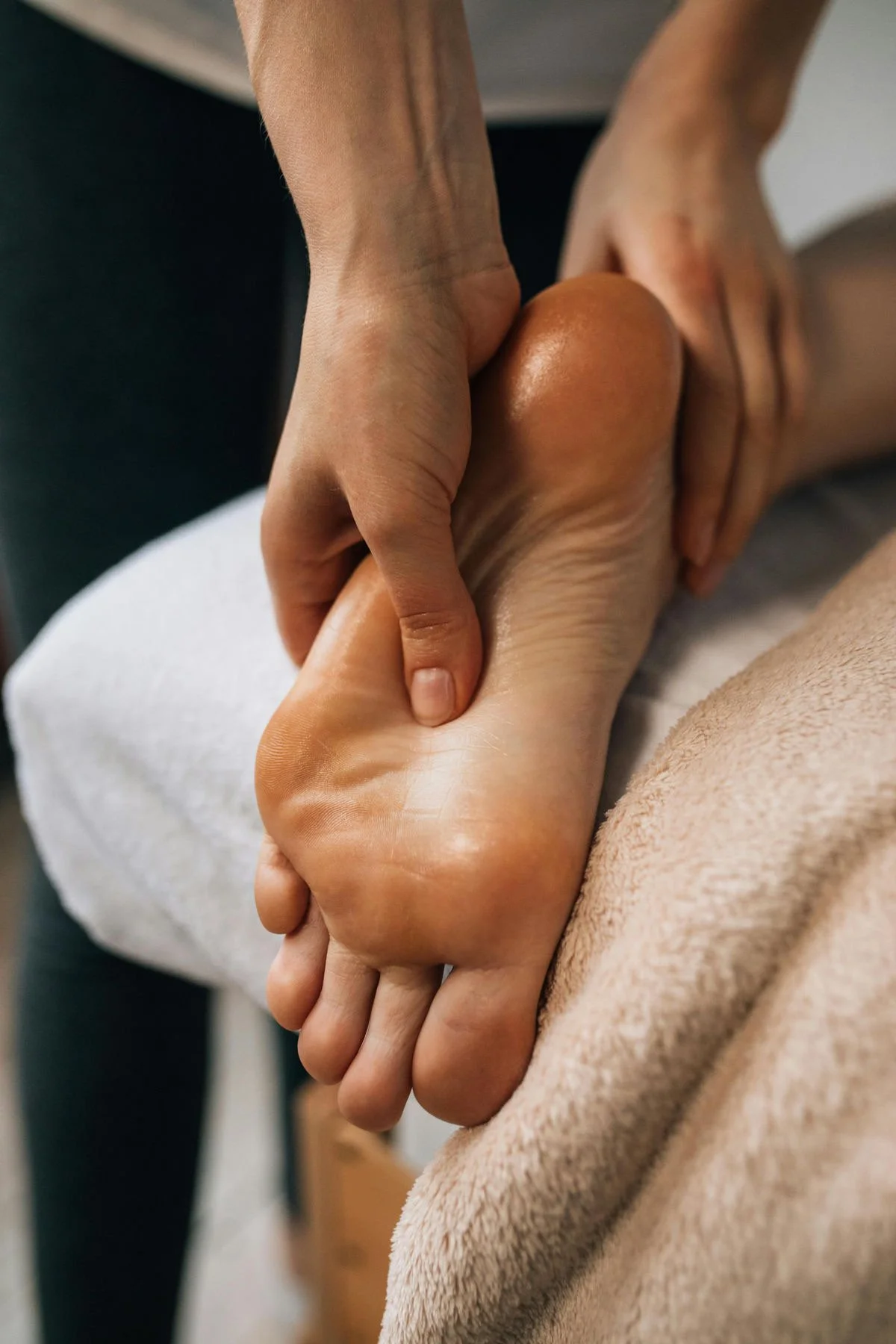
3. Tissue release (hands-on or fascia work)
This addresses deeper restriction. If stretching isn’t working, it’s often because the fascia (the connective tissue around the muscle) is tight, limiting movement.
What this means for your body
Muscle is directly linked to metabolism.
Muscles use energy
To work well, they need the right length
When they contract properly, they use more energy
This improves overall metabolic function
If a muscle is too tight or too weak, it won’t function efficiently.
And when one area is restricted, the body compensates elsewhere.
Over time, this can lead to:
ongoing tightness
fatigue
reduced performance
increased risk of injury
In the clinic, this often presents as someone who is “doing all the right things.”
They stretch regularly, they may train consistently. Yet they still feel tight or restricted. What we often find is that the body doesn’t need more stretching, it needs a different approach. Sometimes it needs movement, to release or both. This is where targeted, hands-on work becomes important.
As a massage therapist who has been practicing for years, I work with both everyday clients and high-performing athletes, including recent work across the Asia Cup and ongoing support within AFL, rugby league, and football seasons.
My clinical work focuses on:
releasing myofascial restriction
restoring balance between strength and length
improving recovery and movement efficiency
This allows the body to return to a more functional, responsive state. If your body still feels tight despite stretching, it may be time to look at a different layer.
Try a session with me at Beattie Street Health to help identify what your body needs and support it to move and function with greater ease.
Your body is not resistant. It’s responding. The key is understanding how to listen.
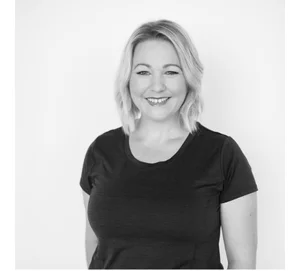
Johanna (Jo) Keyes is a highly experienced remedial massage therapist with over 17 years in clinical practice, known for her skilled, caring approach and ability to support the body through both relaxation and recovery.
Alongside this, Jo integrates remedial and sports massage techniques to address muscle tension, injury, and restriction, supporting the body to move more freely and function at its best.
With a strong understanding of movement (including her own background as a runner), she works with both everyday clients and those who place high physical demands on their body, helping restore balance, mobility, and overall wellbeing.